Busbar & electrical
connection FAQs.
Practical answers for panel builders, distributors and OEM teams—from device fit and accessories to drawings, quality documents and repeat supply.
Products & applications
Find the right product family before comparing individual models.
What products does KASEEY supply?
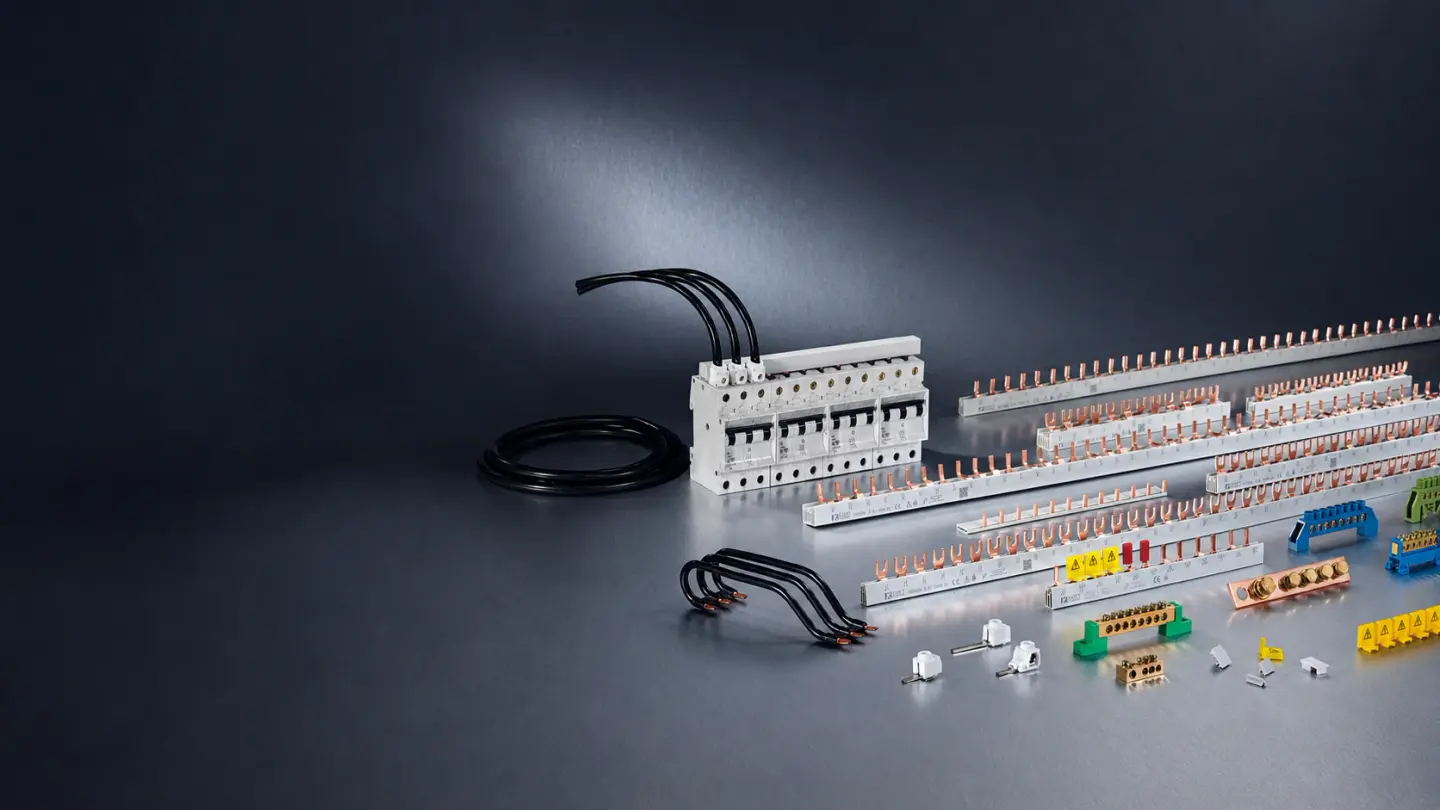
Our electrical connection range includes pin and fork comb busbars, custom busbars, pan assembly busbars, copper bars, brass bars and terminal blocks. We also offer busbar end caps, feed connectors, protective covers, wiring bridges, terminal block boxes and steel or aluminum DIN rails. Start with the product range, then confirm the exact model and accessories for your project.
Who are these products intended for?
The range supports B2B requirements from panel builders, electrical distributors and OEM purchasing teams. A useful enquiry identifies the application, device references, planned quantities and destination market. Product selection remains specific to the equipment and assembly being designed; a category name alone does not establish suitability.
When should I consider a comb busbar rather than a pan assembly?
Begin with the distribution layout. A comb busbar connects a defined row of compatible modular-device terminals. A pan assembly is considered where the project needs a coordinated incoming and outgoing distribution interior. Review the device arrangement, mounting references, enclosure space and connection interfaces before choosing either route. Compare the comb busbar range and pan assembly range.
Are copper bars, brass bars and brass terminal blocks interchangeable?
No. Their material, geometry, connection method and intended role must match the design. A bar can be a material or component reference, while a terminal block provides a particular connection arrangement. Specify the material requirement, dimensions, hole or terminal pattern, conductor details and supporting insulation or enclosure. Do not substitute one solely because it looks similar.
Can you help when I do not know the KASEEY model number?
Yes—start by sending the existing device model, application, photographs and any available dimensioned drawing. Include the full connection arrangement rather than only a close-up of one terminal. These references help identify a candidate; final suitability still needs the correct model documents and an agreed specification.
Comb busbar selection
Contact geometry, device spacing and conductor arrangement belong in one review.
What is the difference between pin-type and fork-type busbars?
Pin and fork describe different contact geometries. The correct type is the one permitted by the exact device terminal. Check the pin dimensions or fork opening, conductor thickness, engagement and clamping arrangement against the device documentation. Neither type is universally better, and similar pole counts do not make them interchangeable.
Will a KASEEY busbar fit every MCB brand?
No universal compatibility should be assumed. Provide the manufacturer, exact device series and model, terminal type and the complete row layout. A matching brand name, nominal current or module width is not sufficient evidence. The proposed contact geometry and arrangement must be checked for that particular combination.
Can MCBs, RCCBs and RCBOs share the same comb busbar?
Only where the complete device combination supports the proposed arrangement. These devices can differ in width, neutral position, terminal depth and connection pattern. Send the left-to-right lineup, including auxiliaries and spare positions, so the busbar configuration can be reviewed against every device rather than one representative sample.
What does busbar pitch mean, and how should I specify it?
Pitch is the spacing between successive connection positions. State the required pitch together with the terminal positions, device widths and overall row layout. A row containing mixed devices or auxiliaries may not follow one continuous pattern. A dimensioned drawing is more useful than an isolated pitch value.
How do I choose the pole and neutral arrangement?
Use the actual circuit and device terminal sequence. Specify the required phase allocation, neutral positions and physical order across the row. Do not select a busbar solely by counting teeth or using a label such as 1P+N or 3P+N; the conductor sequence and device connection positions must agree.
Does 10 mm² or 16 mm² determine the current rating?
Conductor cross-section is one selection input, not a stand-alone rating for the finished assembly. Review the selected model’s published ratings and conditions alongside the device terminals, feed arrangement and installation environment. Ask for the relevant datasheet when comparing cross-sections; do not apply a universal current conversion to every configuration.
What length and number of contacts should I order?
Provide the full device lineup, required connection positions, overall available length and allowance for the specified end accessories. Confirm whether you need a finished-length reference or another documented supply format. Device count, contact count and finished length should be checked together, especially for mixed-width rows.
Can I cut a comb busbar or feed it from any point?
Do not assume that every model permits cutting, either-end feeding or centre feeding. Request the selected model’s instructions and approved accessories before deciding. Any permitted modification must preserve the required conductor separation, insulation and end protection. Installation work belongs with qualified personnel following the equipment documentation and applicable rules.
Accessories & panel components
Specify the complete connection, not only the conductor.
How do I choose busbar end caps and protective covers?
Match them to the exact busbar profile and application. End caps address the end of a compatible profile; protective covers have their own specified coverage and fit. They are not automatically interchangeable across series. Include both in the order review and ask which accessories are required for the chosen arrangement. See end caps and protective covers.
Which feed connector should I use?
Identify the busbar model, intended feed position, conductor details and required electrical duty. Confirm the connector’s permitted conductor range, contact geometry and installation conditions from its documentation. A connector that physically fits is not by itself evidence of an acceptable electrical connection. Review the connector range with the busbar reference.
What information is needed for wiring bridges?
Send the exact terminals or devices to be linked, the number and spacing of connection positions, available space and the required electrical function. Confirm the selected bridge reference and compatible terminal arrangement before ordering. The number of bridge positions alone does not prove fit. Browse wiring bridges for the available references.
How do I specify a brass terminal block or terminal block box?
Include the intended conductor arrangement, conductor sizes, terminal count, mounting method and space constraints. State whether you need the terminal component, an enclosure or a complete specified arrangement. Review the model’s dimensions and connection data; do not infer enclosure protection or terminal ratings from a photograph.
What should I confirm when ordering DIN rails?
Confirm the rail profile, steel or aluminum requirement, length, hole pattern and mounting arrangement against the devices and cabinet design. Also identify any finish or environmental requirements. Devices mounting on a DIN rail does not mean that a comb busbar clips directly to the rail or fits every device mounted on it.
What drawings are needed for a pan assembly review?
Provide the single-line diagram, incoming and outgoing device schedule, physical arrangement drawing, enclosure dimensions and mounting references. Include conductor approach, neutral/earth requirements and protective-cover space. A current-class name or way-count reference is only a starting point; the complete interior needs its own interface and performance review.
OEM, branding & packaging
Turn a purchasing idea into a controlled product reference.
Can KASEEY review a custom busbar drawing?
Yes. Share the proposed contact geometry, pitch, conductor dimensions, pole sequence, insulation requirements, finished length and intended device arrangement. Include the drawing revision, quantities and target market. Our team reviews the requirement before confirming feasibility, sample arrangements and commercial terms. Explore OEM / ODM support.
Can a sample or photograph replace a drawing?
A sample or photograph can help explain the requirement, but it may not define tolerances, material, internal conductor arrangement or electrical performance. Use it as a reference and agree the critical dimensions and specification before approval. Clearly identify which existing features must be reproduced and which need changing.
Can you add our logo or model markings?
Logo, model references and label requirements can be discussed for the selected product. Supply the artwork, wording, location and any durability or market requirements. The available marking method and usable area must be confirmed; do not assume the same process works on every conductor or insulation profile.
Can you customize packaging and labels?
Discuss individual packaging, cartons, labels, barcodes, manuals and shipping marks as part of the order brief. Provide the required artwork and packing quantities, and identify any handling or destination requirements. Confirm the approved packaging reference before production rather than relying on a previous order for a different product.
How should an OEM sample be approved?
Agree what the sample is intended to verify: dimensions, interface fit, appearance, marking, packaging or other documented requirements. Record the approved drawing revision and any deviations. A visual approval should not be treated as approval of untested electrical performance or an undocumented device combination.
How are changes handled on repeat orders?
Reference the previously approved model, drawing revision, marking and packaging. List every requested change explicitly, including a substitute mating device or a revised material requirement. Ask for confirmation of the affected specification before release so the purchase order and production reference describe the same configuration.
Quality & technical documents
Match every document to the product and scope you are buying.
Which technical documents should I request?
Start with the selected model’s datasheet and dimension drawing. Depending on the application, request relevant material information, installation instructions, test evidence and available compliance documents. State the destination market and the decision each document must support. Document availability and scope are confirmed for the specific reference. Visit Downloads.
Does a certificate or logo on the website cover every product?
No. Check the document holder, issuing body, model scope, standard, ratings and validity where applicable. Company qualifications and product-specific evidence serve different purposes. Request confirmation that a document covers the exact ordered configuration rather than applying a logo to the entire range. See published credentials.
What quality checks should be agreed for my order?
Define acceptance criteria around the selected product: critical dimensions, material and insulation references, workmanship, marking, quantities and any applicable tests. Agree which records are required and how deviations are handled. The inspection plan should reflect the order specification; do not assume every product receives the same test schedule. See Quality Control.
What information helps investigate a received-product issue?
Provide the purchase order, product model, batch or label reference, quantities affected, photographs and measured results with the measurement method. Identify the drawing revision or acceptance criterion involved. Keep the relevant samples and packaging available for review. If safety may be affected, stop using the affected component and involve the responsible qualified person.
Does a component test report approve the completed panel?
No. A component report has a defined scope; the panel also includes devices, enclosure, conductors, connections and installed conditions. The responsible assembly designer must determine the applicable requirements and verification for the complete arrangement. Product selection support does not replace that responsibility.
Samples, quotations & delivery
Give purchasing and engineering the same order brief.
What should I include in a quotation request?
Send the product family or model, drawing revision, required dimensions, device references, accessories, quantity and destination market. Include marking, packaging and document requirements, plus the delivery destination and target schedule. If a point is undecided, flag it clearly so the quotation can distinguish confirmed requirements from open questions.
What is the minimum order quantity?
MOQ depends on the product reference, quantity mix and customization scope. Ask for confirmation for each requested item, especially when combining standard and custom configurations. We do not publish one universal MOQ for the entire range; the quotation should state the applicable quantity and conditions.
Can I request samples before placing a production order?
Ask about sample availability for the exact reference and explain what you need to evaluate. Sample quantity, preparation, charges and shipping arrangements are confirmed case by case. For custom work, agree the specification and approval criteria before treating a sample as the reference for a production order.
How long will production and delivery take?
Request a schedule against the confirmed model, quantity and customization requirements. Separate sample preparation, approval, production and transport when discussing your target date. Lead time is confirmed for the specific order; a previous shipment or an indicative conversation is not a guarantee for a new configuration.
How are price, payment and shipping terms confirmed?
These belong in the written quotation and order agreement. Provide the delivery destination, packing requirements and requested shipping basis so the scope is clear. Confirm what is included, how long the quotation is valid and any conditions before placing the order. Do not assume freight, duties or another order’s payment terms are included.
Where can I ask a question that is not listed here?
Use the Request a Quote button below or the contact page. For a technical question, include the exact model and application rather than only a general product name. For further reading, visit the Blog; model-specific documents and confirmed order references take precedence over general guidance.