Respuesta corta
Before requesting a custom comb busbar quotation, prepare five things: the exact breaker brand and series; pole arrangement and total tooth count; contact shape and pitch; finished length and insulation form; and marking and packaging requirements, because leaving any one undefined creates clarification loops, quotation assumptions and possible rework.
For an overseas panel builder, distributor or OEM buying from a Chinese factory, the useful starting point is a specification the factory can turn into a drawing and a production route. A current rating and a product photograph alone do not define the part.
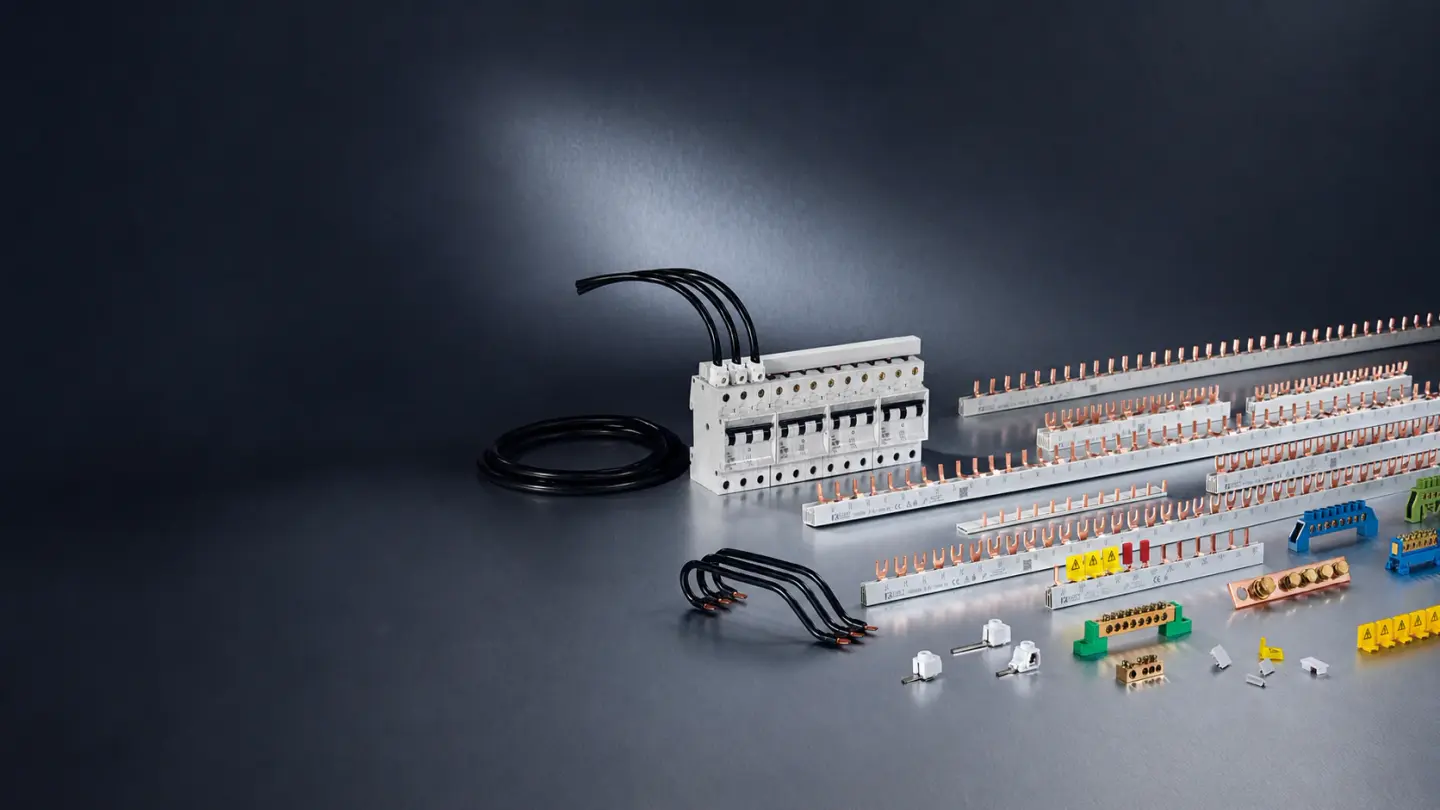
This guide explains what to send a custom comb busbar manufacturer, how to read the resulting quotation and how to move from an enquiry to a confirmed sample. Kaseey’s custom busbar and OEM programs start from a device sample, drawing or existing busbar and identify geometry, conductor section, insulation and order information as review inputs.
For supplier selection, use How to Choose a Comb Busbar Manufacturer: A Factory Audit Checklist; this enquiry guide assumes you are ready to discuss a specific part. If the seller’s role is still unclear, see Busbar Factory vs Trading Company.
Custom comb busbar RFQ checklist: define the part before comparing prices
Copy this table into your enquiry and mark each item complete only when the attached reference identifies it. Where a decision is open, write “to be confirmed” and ask the factory to quote a clearly identified alternative. Do not let a blank become an assumed production instruction.
| Done | RFQ item | How to define it | What goes wrong if it is unclear |
|---|---|---|---|
| [ ] | Breaker brand, series and exact references | List the actual MCB or RCBO catalogue references, terminal drawings and full row layout. Identify variants and provide device samples where the interface needs confirmation. | A familiar brand or module width can conceal different terminal openings, clamp positions or permitted busbar interfaces. A sample may fit the wrong device family. |
| [ ] | Pole arrangement and total tooth count | State the conductor arrangement, phase/neutral sequence, number of devices and total physical teeth. Identify intentionally unused positions on a marked row drawing. | The factory can quote the right overall length with the wrong electrical sequence or number of connections. Device count, pole count and tooth count are different inputs. |
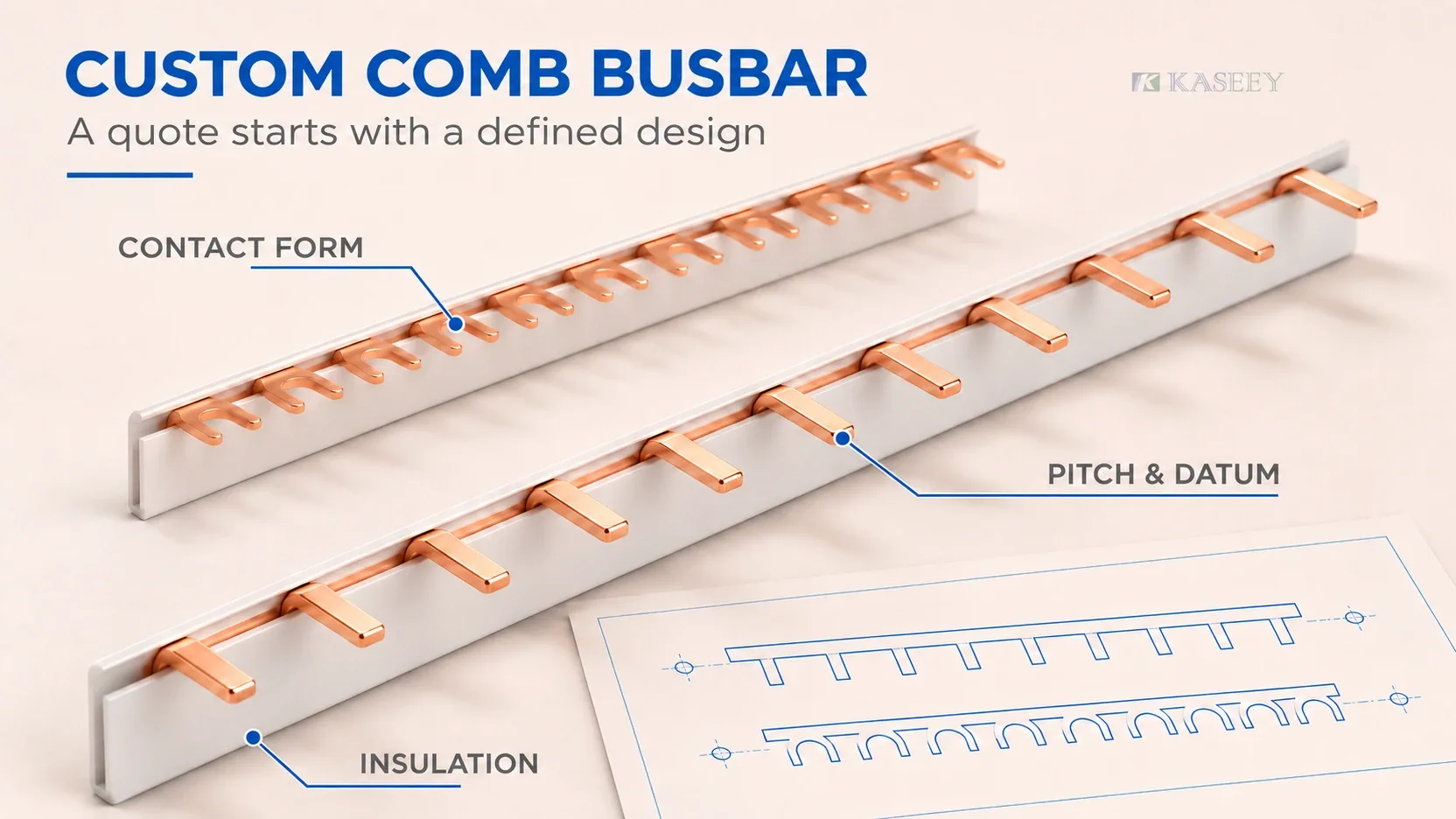
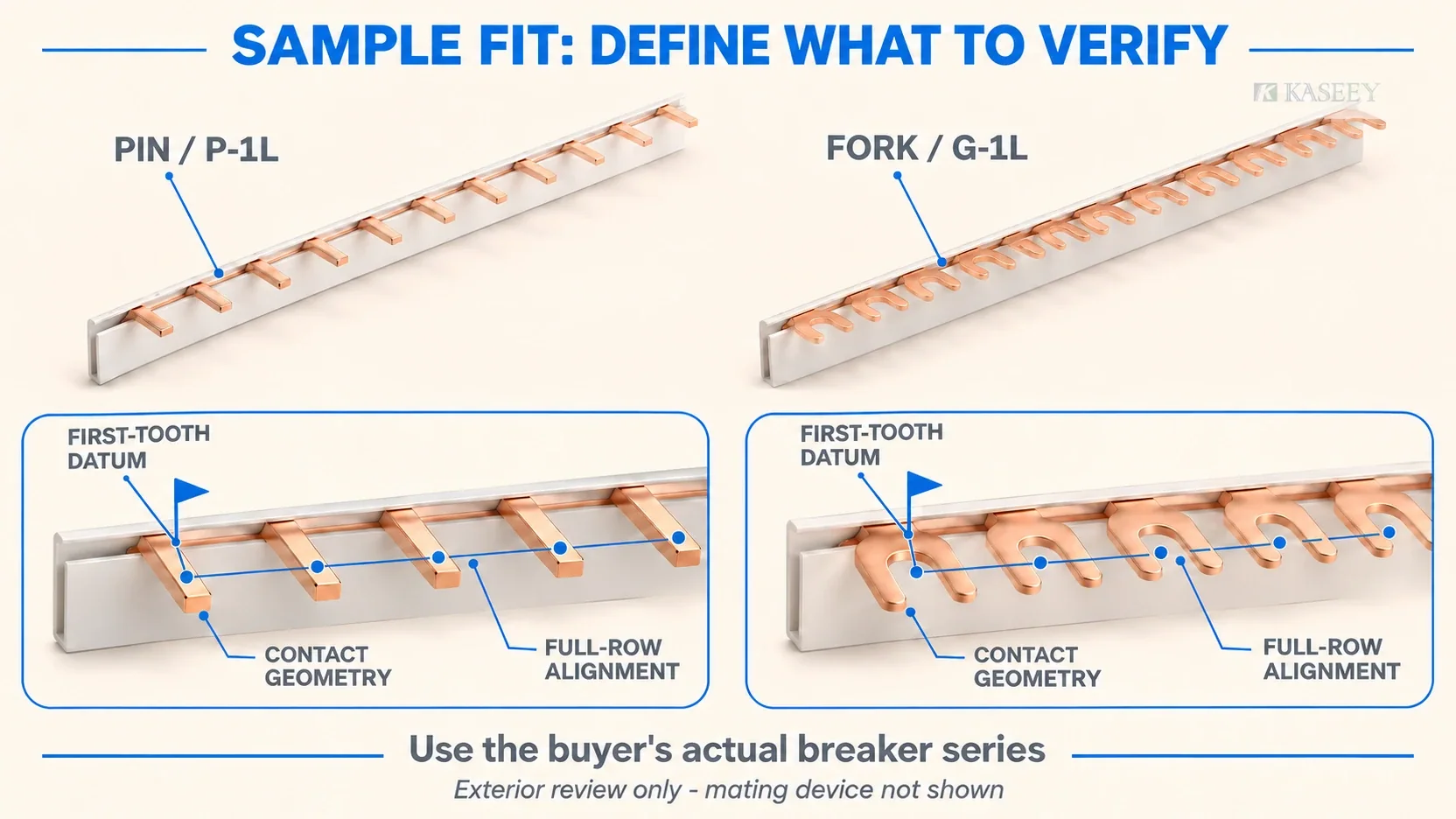
| [ ] | Pin or fork contact | Name the contact form and provide the critical blade or fork dimensions from the intended interface. Show the connection orientation on the drawing. | A contact that looks similar may sit outside the intended clamp or lack the required engagement. Bending a contact is not a substitute for the correct geometry. |
| [ ] | Pitch and first-tooth datum | Give the specified contact center spacing, the first tooth’s position from a named end datum and the permitted full-pattern tolerance. An “18 mm modular row” is application shorthand; obtain the actual device and busbar dimensions. | The first contact may align while later contacts drift. Equal nominal pitch does not establish the same end offset, contact width or terminal fit. |
| [ ] | Finished length and cutting allowance | Specify overall finished length, retained teeth, end offsets and any separate conductor/carrier lengths. If ordering stock for later cutting, distinguish supplied length from required finished length and ask for the permitted cutting allowance and end treatment. | A length-only instruction can remove a required tooth, leave the wrong end overhang or omit space for end protection. The factory may price stock length while you expect a finished part. |
| [ ] | Rated current and conductor cross-section | State the intended duty, target current, conductor material and requested cross-section together with the assembly conditions and evidence required. Ask the factory to confirm the exact proposed model and documented rating basis. | An ampere label alone does not define the copper section or establish the rating of your completed assembly. Different quoted constructions can appear equivalent. |
| [ ] | Insulation form, material and color | Identify the profile, coverage, relevant material requirements and color reference. Explain whether color has a conductor-identification or customer-standard function. Ask whether a material or color change needs further review. | A cosmetic-looking change can introduce a different material specification, coverage or identification convention. A matched shade is not proof of equivalent insulation performance. |
| [ ] | End caps and protective accessories | Identify which ends need protection, which teeth remain unused, the required accessory references and whether accessories are supplied fitted or loose. | A quotation may omit caps or tooth covers, or include accessories that do not match the chosen profile. End protection does not cover projecting unused teeth. |
| [ ] | Marcado del producto | Supply brand artwork, model text, variable fields, requested location and marking method if prescribed. List any proposed certification marks separately and request confirmation of authorization and exact scope. | New artwork or an unsuitable marking area can change the cost and sample work. A requested logo or certification symbol cannot be treated as automatically approved. |
| [ ] | Packaging and labeling | Specify units per inner pack and carton, contact protection, product label fields, barcode requirements and shipping marks. Separate plain packing from printed customer packing. | Suppliers may price different packing scopes. Exposed teeth, unclear quantities or mismatched labels can create receiving and handling problems. |
Add the destination market, enquiry quantity, planned trial quantity, repeat-demand forecast and requested commercial basis. Identify the delivery destination and whether freight is included or separate. Ask the factory to confirm MOQ, price validity, currency, sample charges, tooling charges and timing for the exact configuration; none should be assumed from another product listing.
Kaseey’s P-1L product page identifies contact dimensions and device pitch separately. Use the selected model’s drawing as the reference rather than converting the row’s nominal module description into a universal busbar dimension.
Keep marking in the quotation scope from the beginning
Include the marking and packing brief in the RFQ even if the final artwork is still pending. Ask the factory to identify which items are provisional and which changes would require a revised quotation. For the later artwork and physical-proof approval stages, use OEM Comb Busbar Branding, Marking and Packaging Approval Workflow.
A certification mark is a controlled compliance statement, not decoration. Ask for the exact model, configuration, holder and destination-market coverage before including one in artwork. For CE specifically, the European Commission’s CE marking guidance explains the manufacturer’s conformity responsibilities and notes that not all products should carry the mark. A generic company certificate or a mark on a photograph does not establish coverage for a new custom configuration.
How a factory builds the quotation
A credible comb busbar OEM quotation connects the requested part to a proposed manufacturing route and states the assumptions still open. Kaseey’s manufacturing page describes material preparation, component processing, assembly, inspection and packing around the confirmed specification. Ask how your particular design moves through those stages.
| Quotation driver | What changes the work | What the buyer should ask the factory to confirm |
|---|---|---|
| Existing or new tooling | A design may fit existing contact and insulation tooling, require an adjustment or need new tooling. A length change alone does not answer that question. | Which tooling can be reused? What change needs engineering review? Are tooling, setup and modification charges separate, and who controls the tooling reference? |
| Copper strip and other materials | Conductor section, strip dimensions, material/finish requirements and insulation profile influence procurement and usable material. | What material specification is priced? Is it available for this order? How are material-price changes and quotation validity handled? |
| Production scheduling | Tool setup, the selected route, material readiness and other committed production affect when an order can start. | What are the material-ready, sample-ready and production-release conditions? From which agreed event does the quoted lead time run? |
| Sample confirmation rounds | An unresolved interface or changed artwork can create another drawing revision or sample round. | What does the initial sample charge include? What triggers another charge or revised schedule? Which samples come from the intended production route? |
| Inspection, marking and packing | Special checks, separate accessory packing, customer labels and printed cartons add scope. | Which checks and deliverables are included? Which marking and packing items are optional or provisional? |
Look for a quotation that names the drawing revision, configuration, quantity basis, included accessories and sample scope. If two prices differ, reconcile those inputs before deciding that one factory is more expensive. A lower price may simply exclude an item you expect to receive.
Where a drawing is incomplete, request a budgetary quotation with explicit assumptions and a defined route to a firm offer. Do not treat an indicative price as a commitment to make an unreviewed geometry. This guide provides no standard price, MOQ or delivery duration: request each from the factory for the actual order.
From drawing or reference sample to a sealed production reference
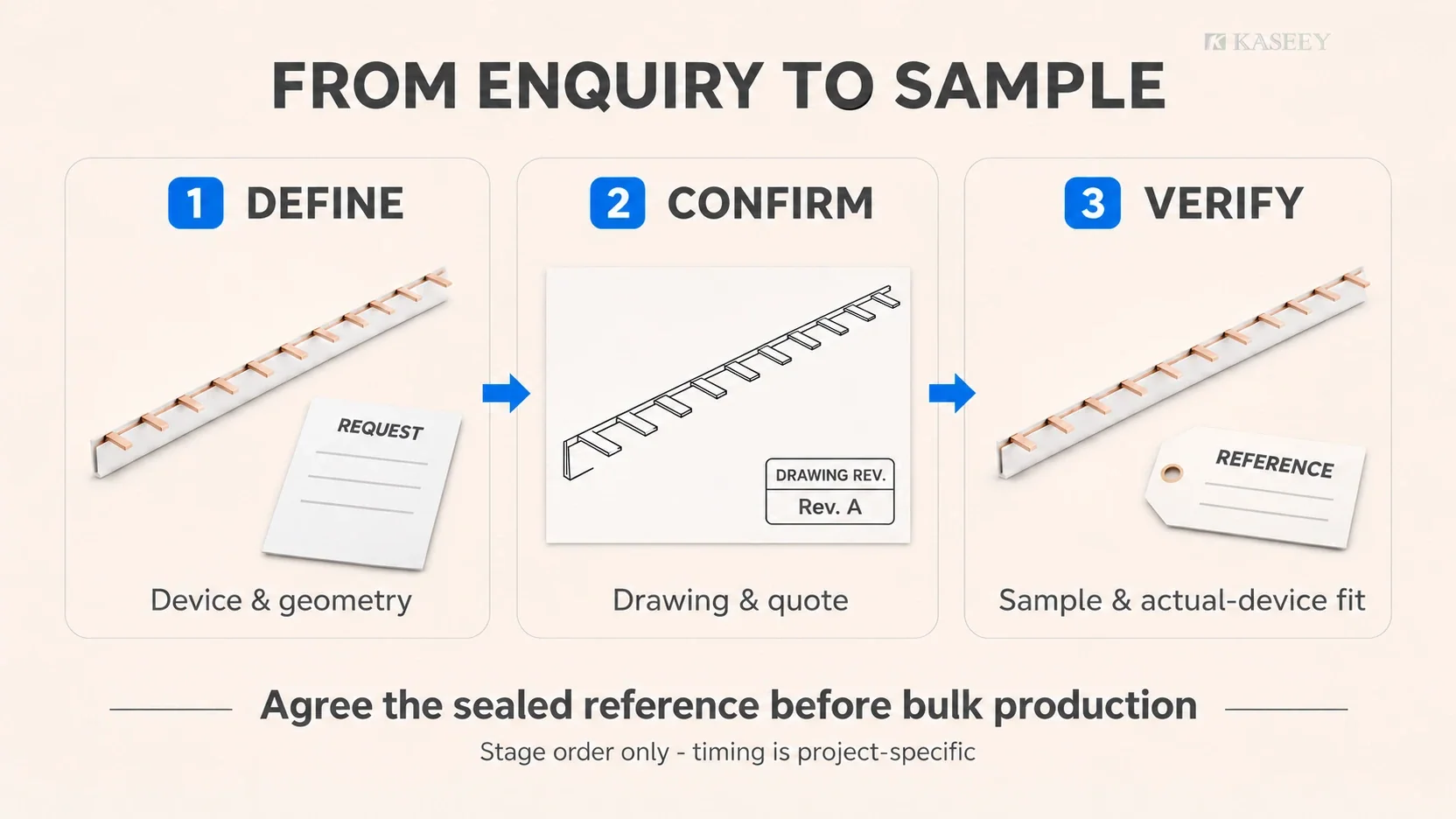
The following sequence is a project planning aid. Confirm responsibilities and commercial terms with the factory; do not assign shipment dates before the necessary decisions are closed.
1. Send a drawing, a sample or both
If you have a drawing, provide the current revision, units, named datums, critical dimensions and the actual device references. Identify which dimensions are mandatory and which may be proposed by the factory.
If you have only a physical sample, identify its origin and intended function. Send the mating breaker series or arrange access to the exact devices, and ask the factory to document the sample’s interpreted geometry. An unmarked sample does not communicate material, electrical rating, tolerance or certification scope by itself. Obtain permission to reproduce any third-party design or artwork you supply.
2. Obtain a factory confirmation drawing and a scoped quotation
Ask the factory to convert the agreed inputs into a confirmation drawing with an orderable reference. Close discrepancies between the sample, drawing and RFQ explicitly. Record the contact pattern, datum, finished dimensions, conductor/insulation specification and accessories rather than approving a thumbnail by email.
Tie the quotation to that revision and identify any items that remain conditional on sampling. Kaseey’s OEM / ODM review route distinguishes private labeling an existing product from developing a custom configuration; state which route your enquiry needs.
3. Check sample fit against your actual breaker series
Arrange an unenergized fit review using the buyer’s actual breaker references and representative full row, performed by competent technical personnel. Record sample identity, device identity and drawing revision before checking the interface.
Check the intended contact entry and seating, alignment from the first to the last position, line/neutral mapping where relevant, insulation clearance and accessory fit against the applicable documents. Use the device manufacturer’s connection instructions for any clamping evaluation. Do not invent an insertion depth or use force to make a sample pass.
Record differences with photographs and marked drawing references, then agree whether a revision and another sample are needed. Physical fit is one acceptance check; it does not establish the required electrical performance or compliance evidence.
4. Seal the reference before bulk production
After the agreed checks pass, retain an identified sample linked to the released drawing revision, device references, accessories and agreed acceptance record. Agree which party retains each reference and how a proposed change will be handled. A sealed sample complements the written specification; it does not replace it.
For the separate decision to approve a supplier for continuing supply, follow Cómo Calificar a un Proveedor de Barras Colectoras Peine para Suministro OEM.
Typical stage order: RFQ inputs collected -> open requirements clarified -> confirmation drawing and quotation agreed -> sample made -> actual-device fit reviewed -> revisions resolved if needed -> reference sample and drawing released -> bulk production authorized. Ask the factory to assign timing only after reviewing the work and dependencies.
Common custom comb busbar enquiry mistakes
- Sending only an ampere rating. Include the breaker references, interface geometry and requested construction. Otherwise the factory must guess which physical part the current request describes.
- Giving length without tooth count. State both, with the first-tooth datum and end offsets. Matching the outside length does not guarantee the required connections.
- Treating insulation color as decoration. Explain the identification function, material requirements and applicable customer specification. Have the proposed color/material combination reviewed rather than accepting appearance alone.
- Adding marking requirements after ordering. Put branding, model text, any requested authorized marks and packing requirements in the initial RFQ. Late changes can reopen the quotation, sample work and order schedule.
Preguntas frecuentes
Can a factory change only the comb busbar length without making new tooling?
Sometimes, if the existing contact pattern, conductor section, insulation profile and permitted finishing process can produce the required tooth count and end geometry. A length-only request does not prove that tooling can be reused. Send the finished dimensions and retained contact count, then ask the factory to confirm feasibility, end protection, tooling implications and any separate setup charge.
How should I discuss a small trial order with a comb busbar OEM?
State the trial quantity, its technical purpose and your expected repeat demand separately. Ask whether a trial can use an existing configuration, which setup or material commitments apply, and what sample, inspection and packing costs are included. Request the trial MOQ, price and timing in writing for that exact part. A trial order does not automatically establish the terms for later bulk orders.
Does customization affect certification or compliance documentation?
It can. Changes to material, contact geometry, insulation, construction or marking may affect the evidence applicable to a configuration. Ask the manufacturer to identify the exact model and document scope, explain whether the change remains covered and state any additional assessment required for the destination market. Do not copy a certification mark from a standard product onto a custom part without confirmed authorization and coverage.
Can I obtain a quotation with only a sample and no drawing?
A sample can start the review, but the factory still needs the intended device references, quantities, market and requirements that the sample cannot show. Ask for a confirmation drawing and a quotation listing unresolved assumptions. Verify that drawing and the proposed sample against your actual breaker series before releasing production. The reference sample alone cannot establish hidden material properties or an electrical rating.
What makes two custom comb busbar quotations comparable?
Both should refer to the same drawing revision, device interface, pole arrangement, tooth count, conductor and insulation specification, accessories, marking, packaging and order quantity. Compare tooling and sample charges, included checks, commercial terms, freight scope and timing assumptions separately. Resolve exclusions before comparing totals; a lower price for a different scope is not a like-for-like offer.
Send a quote-ready custom comb busbar enquiry to Kaseey
Send the completed checklist, your drawing or reference sample details, the exact breaker lineup, trial and repeat quantities, destination market, and marking/packing brief through Kaseey OEM / ODM. For a geometry change or a new device platform, start with the custom busbar OEM solution and identify the open fit requirements.
Ask Kaseey to return the proposed configuration, drawing reference, assumptions, sample plan and order-specific commercial terms. That gives engineering and purchasing one defined part to review before committing to production.
Fuentes
- Programas de barras de conexión personalizadas y OEM – Kaseey. Public requirements for device references, geometry, material, insulation, samples and repeat-supply information.
- Custom Busbar Manufacturing & OEM Supply – Kaseey. Existing-product and custom-development routes, enquiry inputs, drawing/sample review and order-specific commercial/document scope.
- Comb Busbar & Electrical Component Manufacturing – Kaseey. Public production stages and original factory photographs; no capacity or delivery-duration inference.
- Tipo espiga 1-Barras colectoras de fase (P-1L) – Kaseey. Separate model-specific pitch and contact geometry; original pin-contact photograph.
- Tipo horquilla, barras colectoras de 1 fases G-1L – Kaseey. Original fork-contact photograph; dimensional and mating details require the selected model documents.
- CE marking – European Commission. Conformity responsibilities and limits on using CE marking; not evidence that a particular custom part is covered.