Câu trả lời ngắn gọn
Check the company’s registered business scope, request a live demonstration of the relevant comb busbar production line, and ask process questions that the people making that comb can answer specifically; cross-check all three, because no single signal proves factory ownership or direct production.
For an overseas panel builder, distributor or OEM buyer sourcing comb busbars from China, the first question is simple: does the seller operate the plant making this comb, or does it buy the comb from another company? The answer affects who can explain a pin-to-fork change, identify the correct C45 drawing or resolve a length question before quoting.
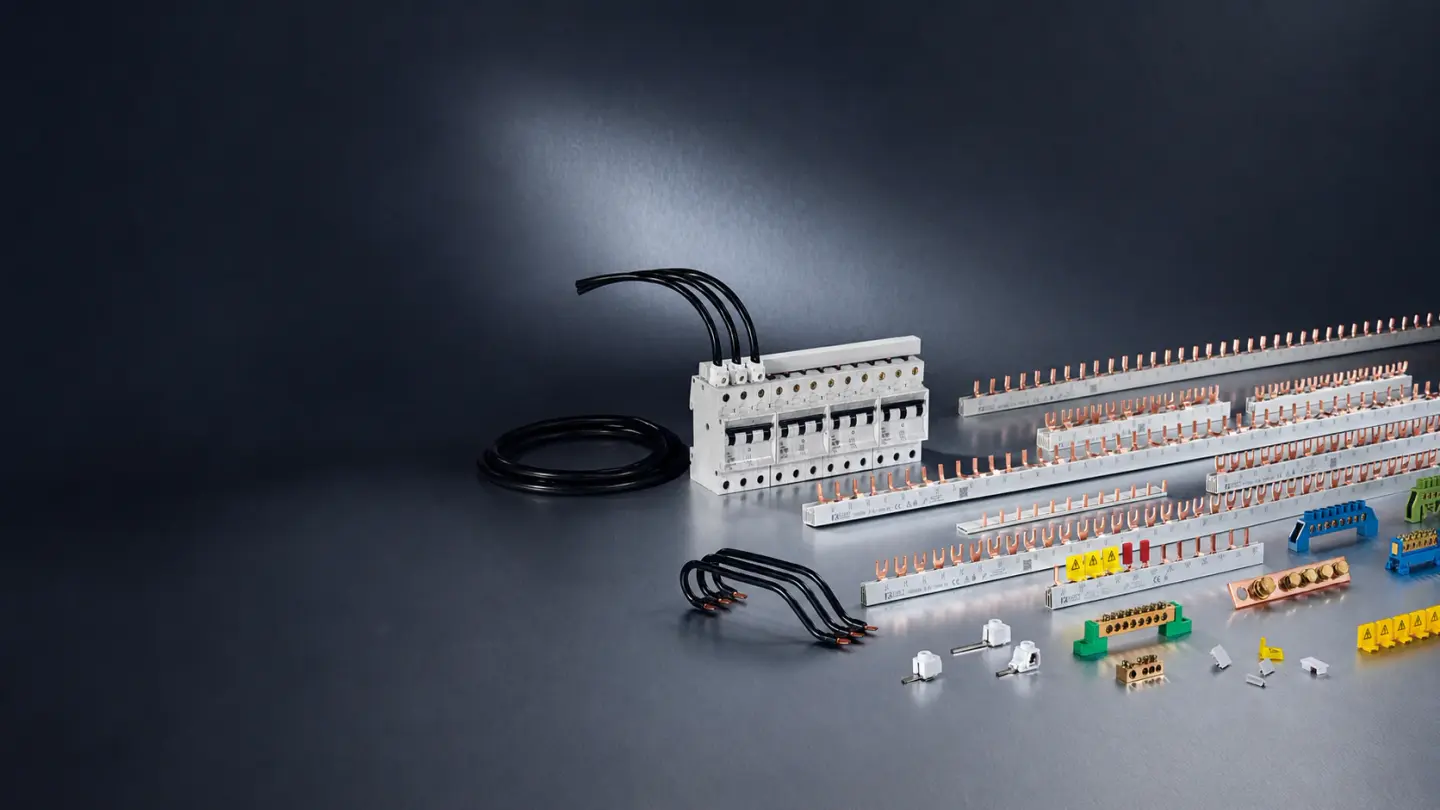
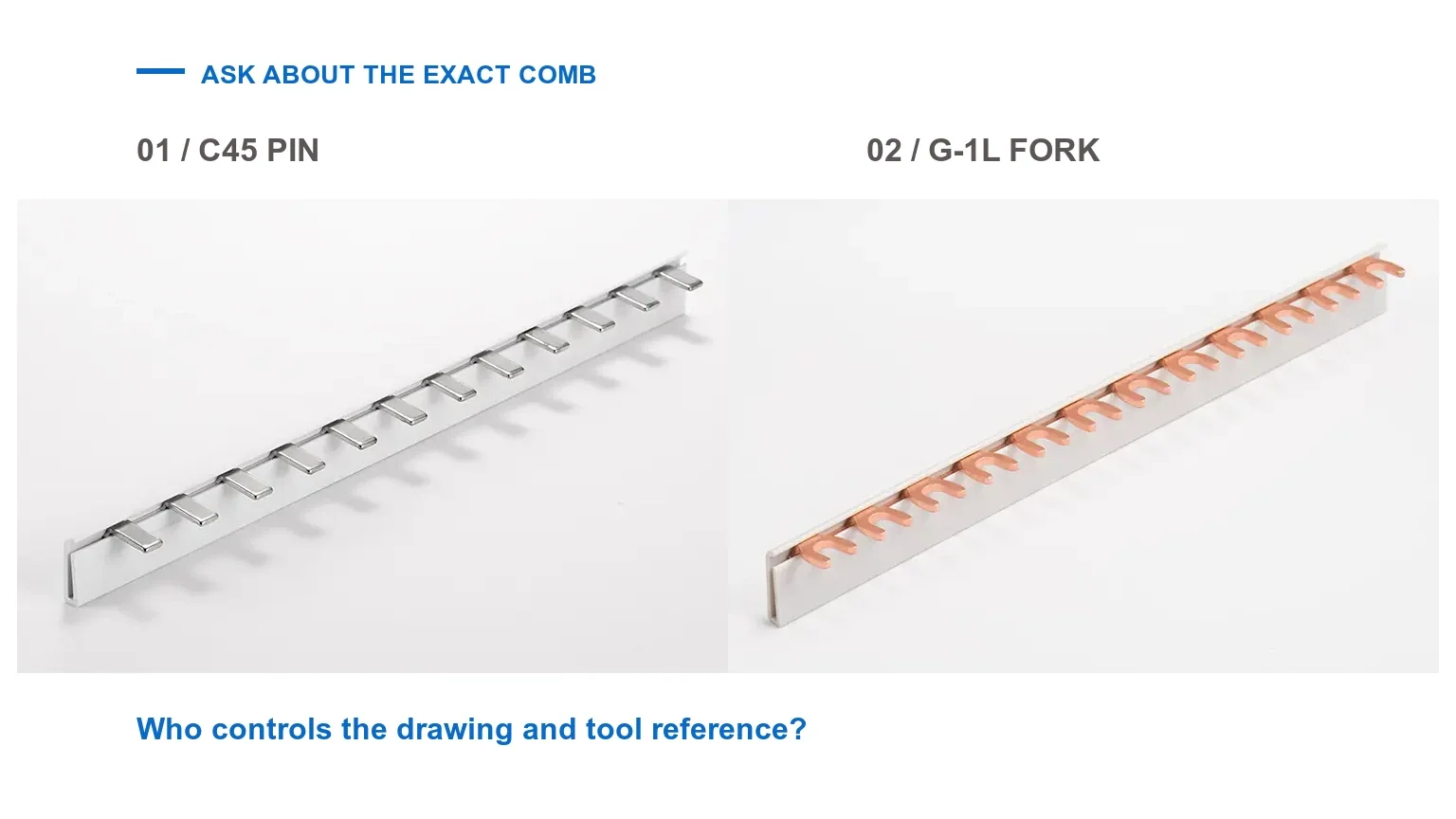
This guide concerns 63A/100A comb purchasing requirements, pin and fork contacts, C45-style products and the nominal 18 mm modular-device environment. These descriptions identify the buying context, not a universal compatibility or current-rating claim. Even pitch needs an exact reference: the KASEEY C45 product page specifies 17.8 mm, rather than an assumed 18.0 mm.
Use the checks below to identify the seller’s role before signing. Once that role is clear, the comb busbar manufacturer factory audit checklist takes over the detailed plant assessment.
Factory vs trading company: compare these comb-specific signals
The table describes patterns to investigate, not a scoring system. A technically capable trading company can provide detailed answers, and a factory salesperson may need an engineer. What matters is whether the seller can connect its claims to an identified producer and explain its own role honestly.
| Signals consistent with a real comb busbar factory | Signals consistent with a trading company or reseller |
|---|---|
| Product depth: the team can explain its pin/fork comb families, distinguish C45 references, and identify which caps, carriers and connectors belong with them. Its discussion has depth beyond catalogue names. | Product breadth without a production explanation: comb busbars appear beside unrelated goods, while pin/fork or C45 questions receive only copied descriptions. A broad catalogue is a reason to ask who makes the comb, not proof of trading by itself. |
| Drawings and tooling references: staff can open a current comb drawing, explain who controls revisions, and identify the relevant internal die or tool reference, with sensitive details redacted if necessary. | Catalogue-only references: only a product picture or customer-facing SKU is available; staff cannot explain who issued the drawing or where the tooling is controlled. A trader may legitimately hold supplier drawings, so possession alone is inconclusive. |
| Quotation behavior: for a changed finished length or tooth count, the team distinguishes cutting an existing pattern from changing contact geometry and names the person who can confirm feasibility. | Quotation relayed upstream: every change receives a fresh wait for an unnamed supplier, or a firm price is given before anyone clarifies what the change means. A capable trader should acknowledge the upstream confirmation. |
| Sample timing with a reason: staff explain whether the requested pin/fork variant is stocked, cut from an available length, or needs a production setup, and identify where it will come from. | Sample timing without provenance: a fast sample is described as proof of in-house manufacture, although nobody identifies whether it came from stock, another factory or a consolidated purchase. Slow samples also do not prove factory status. |
| Technical communication: the seller can bring the relevant production employee into a call about the actual comb and state whether that person works for its company or another producer. | Unexplained handoffs: technical questions repeatedly go to an unidentified third party. Honest coordination with a disclosed manufacturer is a trading service; describing that person’s plant as one’s own requires evidence. |
Do not mistake fluent English, a factory-themed website, a low price or an exhibition photograph for production evidence. Equally, do not penalize a real manufacturer simply because its export salesperson consults the workshop before answering.
Check the documents before accepting the factory claim
Read the business scope, not just the English company name
Request a legible business license showing the registered company name and Unified Social Credit Code. Use those identifiers to locate the company in the official National Enterprise Credit Information Publicity System, and compare the record with the license. If you cannot interpret the original-language fields, have a competent reader check them rather than relying on the seller’s English trading name.
Các Shanghai government’s market-access guidance identifies company name, Unified Social Credit Code, registered address and business scope among the information available through that system. It also explains that the scope describes business activities.
Look for manufacturing or production activities relevant to electrical connection components, and distinguish them from wholesale, sales, import and export activities. Trading activities alone do not demonstrate comb manufacture; manufacturing wording alone does not demonstrate an operating comb line. A business can list both. Business scope uses standardized descriptions, as explained in the Beijing government guidance on determining business scope, so do not require one exact English phrase such as “comb busbar factory.”
This is an identity screen, not a legal determination that the business may perform every operation shown. Confirm actual production separately.
Reconcile the seller, PI, payment recipient and certificate holder
Before signing, put four company names beside each other:
- The proposed contracting entity.
- The company issuing the pro forma invoice (PI).
- The beneficiary named in the proposed bank payment instructions.
- The holder or applicant identified in the product documents offered as support.
Are they the same legal company? If not, request a written explanation of each relationship. A manufacturer’s separate export company, an authorized trading company or another disclosed arrangement can explain a difference. A relationship should be documented rather than inferred from similar names or a shared logo. Independently confirm an unexplained payment-recipient change through an established contact before proceeding.
Next compare the production address shown in a certificate or its site annex, where applicable, with the plant address supplied for the video visit. Distinguish a registered office from a production site. If a document names another company’s plant, ask directly: “Is that company the manufacturer of the comb you are quoting, and what is your relationship to it?”
This section checks whose evidence is being presented. It does not replace the model-by-model certificate assessment in the factory audit article.
Ask for a live comb production demonstration
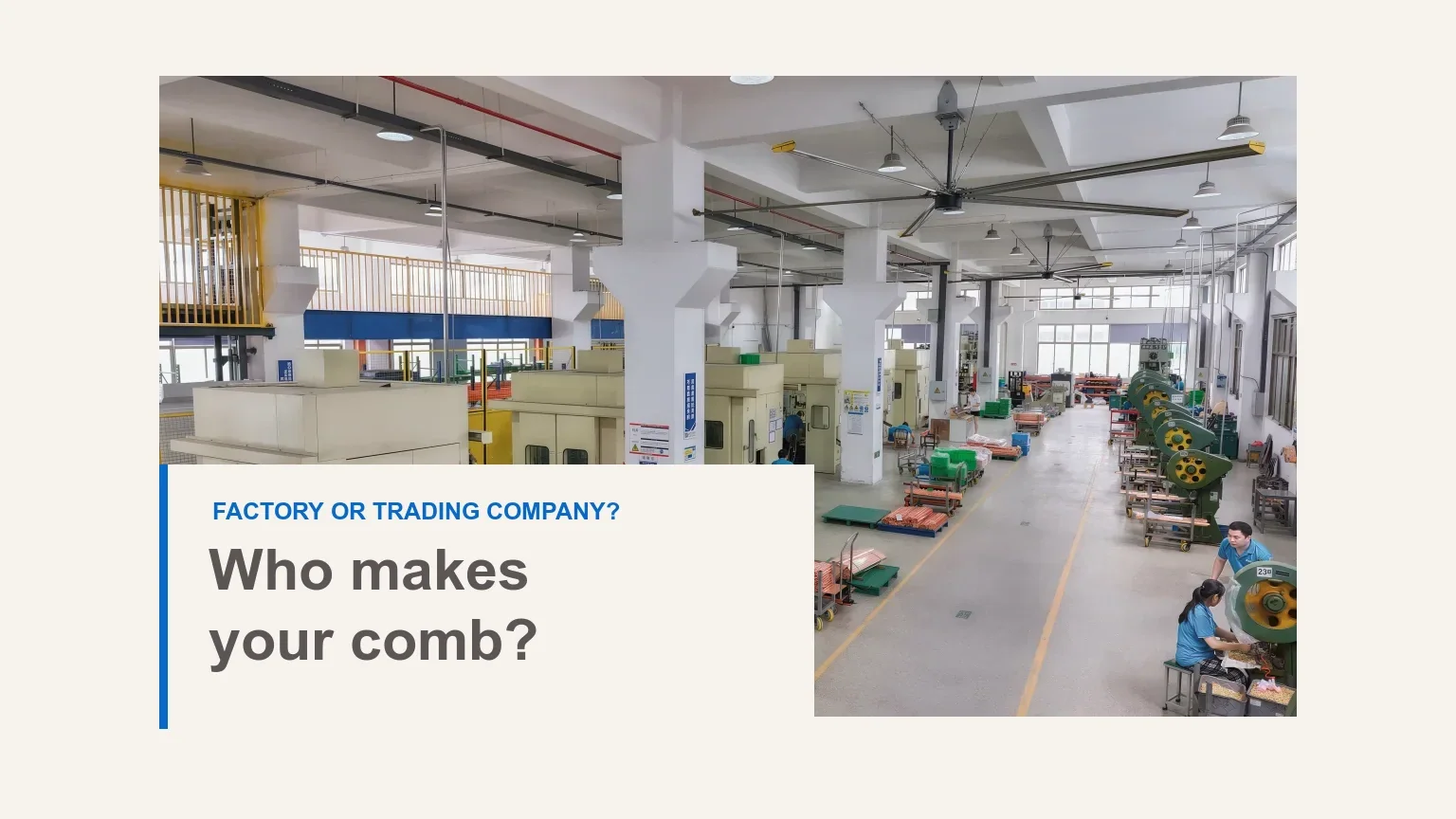
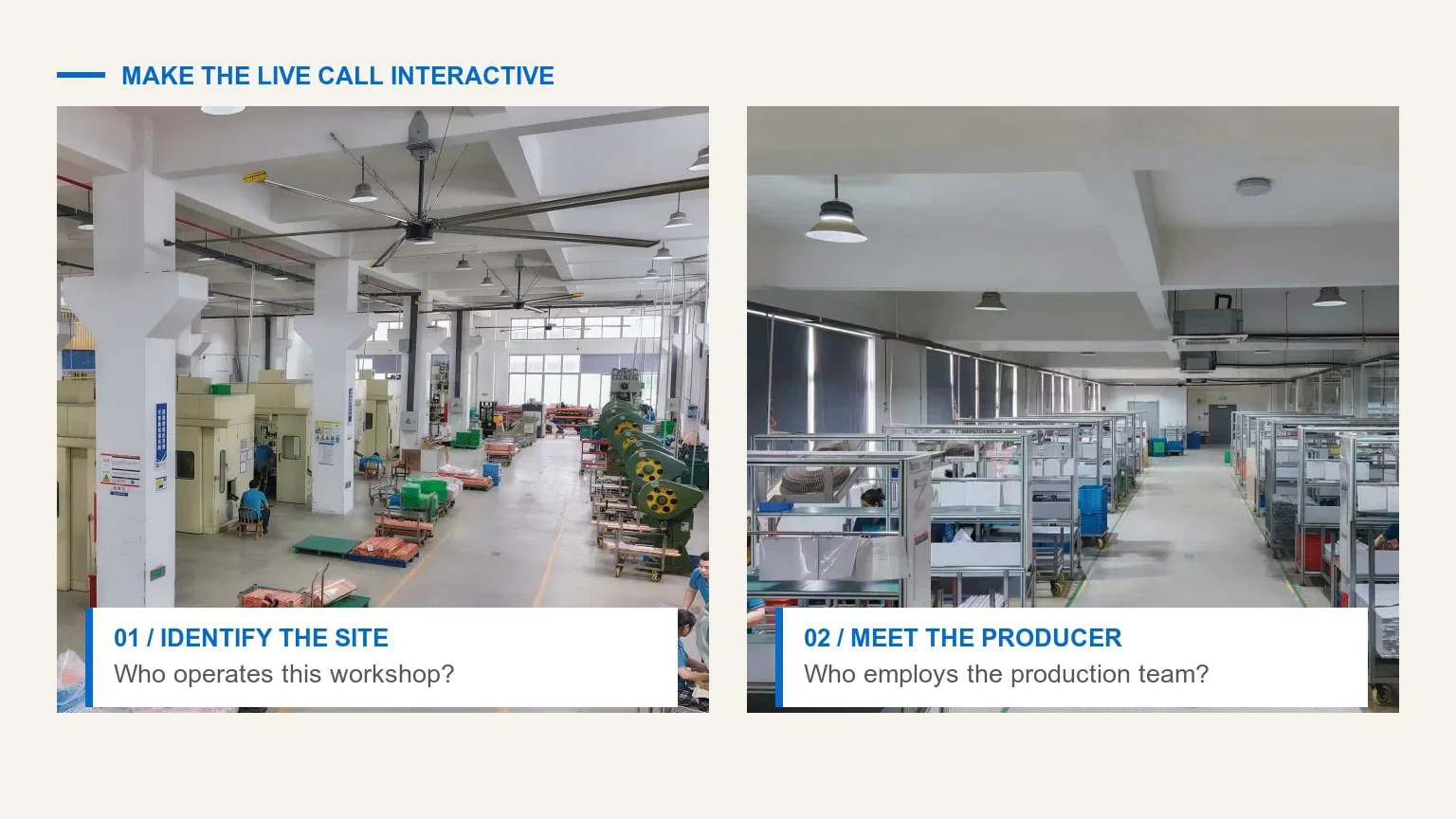
Agree a live call around one identifiable pin or fork comb, rather than accepting a general promotional tour. Use KASEEY’s manufacturing page as an example of workshop views that can help frame a request; static pictures are a starting point, not proof of today’s operating arrangements.
Ask the presenter to connect the entrance or site identification with the relevant working areas in a continuous walk where practical. Then choose follow-up views during the call:
- [ ] Tooth production: show a press actually making the relevant comb tooth form when that operation is scheduled. Ask the operator to identify the part being produced; a running press making an unrelated component does not answer the question.
- [ ] Insulation assembly: show conductors and matching insulation parts being brought together for an identified comb. Ask who employs the operator and who manages that area.
- [ ] Copper-strip storage: show the material labels beside the stock being discussed and explain which stock is used for the named comb. This connects the production claim to a physical input; it is not a material acceptance test.
- [ ] Tool storage: show the relevant comb die or its storage reference and ask who owns or controls it. An inventory identifier helps connect the conversation, but ownership still requires corroboration.
- [ ] Packing in progress: show identifiable finished combs and their pack or shipping-mark reference. Customer details may be covered; retain enough non-sensitive identity to connect the goods to the discussion.
If the line is idle, ask why, request a live view of the setup and relevant parts, and arrange a demonstration when that operation runs. If stamping or another step is subcontracted, the seller should identify that boundary. Do not demand that machinery run merely for the call or that guards be opened.
Expose an incomplete or borrowed tour with follow-up questions
An office-only call leaves the production claim untested. A prerecorded montage cannot respond to an unexpected request to revisit a selected tool or ask a production employee about the named comb. An unexplained cut between buildings leaves the site connection unresolved.
A borrowed factory can also provide a live tour. Ask who operates the site, who employs the presenter and workshop personnel, and why its name or address differs from the seller’s records. Have the salesperson introduce the plant representative’s role instead of treating access as ownership. Where the relationship remains unclear, obtain independent site verification before describing the seller as the manufacturer.
Refusal to show a confidential customer mark is not evidence of deception. Refusal to offer any workable alternative for identifying the plant and the comb being discussed leaves the factory claim unsupported.
Seven questions that test access to the actual producer
Use these as an attribution test: can the seller identify the person responsible for the answer and connect it to the quoted comb? None is a secret password that only a factory can know. A knowledgeable trader may answer well, while a responsible factory may need to retrieve a record. The distinction is specific, attributable answers versus repeated, unexplained deferral.
-
“For this comb length, how do you control cumulative tooth-position error?” A producer-connected answer identifies the responsible operation, the drawing reference and the person who can show the control. “It is standard 18 mm; all MCBs fit” avoids the question. Request the relevant contact without conducting the full dimensional audit here.
-
“Which copper-strip designation do you use for this quoted comb, and who can supply the matching material evidence?” A credible answer identifies the actual material reference and where its supporting record comes from. “We always use the best copper; please trust our quality” supplies neither. Do not accept a spoken grade as proof of material conformity.
-
“What insulation material grade and supplier reference apply to this carrier?” A producer-connected answer can identify the material or retrieve its controlled reference through a named technical contact. “It is flame-retardant plastic, same as every busbar” is an unsupported generality. Confidential supplier details can be handled through an agreed disclosure arrangement.
-
“If I change the finished length or tooth count, which change uses the existing tool and which needs a different setup?” A meaningful answer distinguishes changes to an existing repeated pattern from changes to contact geometry, then explains the proposed setup and MOQ basis. “Any length, any teeth, same MOQ” without clarification is a reason to probe. No universal tooling rule applies to every comb construction.
-
“What currently determines the dispatch date for this exact pin/fork comb?” A useful answer names the actual dependency, such as strip availability, the forming schedule, matching insulation or an outside operation. “Very fast, factory direct” does not establish the production route or its timing.
-
“Who controls the drawing and tooling reference for the C45 comb you have quoted?” A clear answer identifies the controlling company and responsible employee, including any outside producer. “Our partner has it; we cannot say who” leaves the manufacturer unidentified. A retailer’s SKU is not evidence of tool ownership.
-
“Who can join this call to explain the pin/fork change, and which company employs that person?” A direct introduction establishes a traceable technical relationship. Repeated “our engineer is unavailable” responses with no named role, alternative contact or agreed follow-up do not. One delayed answer, language difficulty or a time-zone mismatch is inconclusive.
An honest trader can pass the transparency test by saying, “We buy this comb from the identified factory; their production engineer will answer.” That does not turn the trader into a factory, but it gives the buyer a usable explanation of the supply chain.
Red flags: promises that need a comb-specific explanation
Unusually low MOQ paired with an unconditional delivery promise. For a pin/fork variant already in stock, a small order may be entirely reasonable. For a claimed custom C45 pattern, ask whether the offer uses existing stock, combines demand with another order, or purchases from another producer. Those arrangements can be legitimate, but they do not demonstrate in-house manufacture. The warning is the missing explanation, not a numerical MOQ threshold.
Every comb modification is promised immediately. Ask whether the seller has actually distinguished cutting a length from changing tooth geometry. A promise to change everything while retaining the same ready-stock delivery needs a specific explanation.
No access to the relevant production people. A confidentiality concern can be addressed with a narrower live view or an independent visit. Persistent refusal to identify the producer or provide any practical verification leaves the claim unresolved.
All product images are renderings. Renderings may help explain an available design, but they do not prove a comb exists in production. Request current real photographs of the named pin/fork variant and an interactive view connected to the identified plant. Genuine photographs can also be copied, so image realism alone is insufficient.
Another company’s documents are presented without explanation. A certificate holder, workshop sign or shipping mark naming a different business is a question to resolve, not automatically evidence of fraud. Stop treating the seller as the manufacturer until its relationship is clear.
When a trading company can be the better fit
A disclosed trading company can be useful when your order needs services beyond one comb production line:
- Small evaluation purchases: a trader with identified stock may supply a small quantity of an existing pin/fork comb without waiting for a factory production run.
- Mixed-category consolidation: combining comb busbars, matching accessories and other panel components can simplify purchasing when no one plant makes the whole basket.
- Urgent stock orders: an available, correctly identified standard comb can be more useful than a future manufacturing slot, provided the product and source can be verified.
Evaluate the actual stock, source transparency and responsibilities rather than assuming the intermediary is cheaper or more expensive. A trader is not automatically unsuitable for OEM work either; the buyer needs to know which company controls production and how technical questions reach it.
Record one of three outcomes: seller operates the identified comb plant, seller supplies from a disclosed separate producer, hoặc producer relationship unresolved. Owning a factory building is not the only way to operate a manufacturing business, and a manufacturer may outsource individual processes. Classify the specific comb supply route rather than every item in the seller’s catalogue.
After selecting the supplier, move to the comb busbar supplier qualification guide for OEM supply. For the later receiving task, use the danh sách kiểm tra nhập khẩu thanh cái tổ hợp.
Frequently asked questions
Does a manufacturing business scope prove that a company makes comb busbars?
No. Manufacturing wording supports the registered activity claim but does not demonstrate an operating comb line. Cross-check the legal entity with a live view of relevant pin/fork production and attributable technical answers. A license listing sales or import/export activities alone does not demonstrate manufacture either; a company can list several kinds of activity.
Can a genuine comb busbar factory use a separate export company?
Yes. A separate sales or export entity can explain why the contracting name, PI issuer, bank beneficiary and manufacturer are different. Ask for a documented relationship and a clear identification of the plant making the quoted comb. Matching branding or similar English names alone do not establish that relationship.
Is a very fast comb busbar sample a sign that the seller is a factory?
No. A quick sample may come from the seller’s own production stock, a purchased standard comb, or stock held by a trader. Ask where that exact pin/fork sample comes from and whether it represents the proposed supply route. Timing alone cannot identify the producer, and a slow custom sample does not prove manufacturing status.
What should I ask if the salesperson needs an engineer to answer?
Ask who the engineer works for and arrange a direct discussion about the quoted comb. A factory salesperson consulting its production team is normal, and a transparent trader may introduce its supplier’s engineer. Repeated unexplained handoffs are less useful than an identified technical contact with a specific answer and follow-up plan.
Is it wrong to buy 63A or 100A comb busbars from a trading company?
No. A trader may suit small quantities, mixed-category purchases or urgent stock needs. Confirm the actual manufacturer, exact comb reference and supporting product evidence for the intended requirement. A trading company’s role does not establish or invalidate a rating; neither a 63A/100A label nor nominal 18 mm wording proves suitability for your breaker series.
Identify the producer before evaluating the factory
The useful result is a clear relationship between the seller, the plant and the comb being quoted. Ask KASEEY about a named comb reference and the relevant production contact through the manufacturing page, then use the factory audit guide when you are ready to assess the plant in detail.
Nguồn
- FAQs: Shanghai’s market access policies – Shanghai Municipal Government. Public registration-information fields, the national enterprise information system and the meaning of business scope; not evidence about any specific supplier.
- How is the company’s business scope determined? – Haidian District Government, citing english.beijing.gov.cn. Standardized business-scope descriptions.
- Thanh đấu nối dạng chân cắm, 1 pha (C45) – KASEEY. Published 17.8 mm pitch and original C45 exterior photograph; no universal rating or compatibility inferred.
- Loại càng cua, thanh đấu nối 1 pha G-1L – KASEEY. Original fork-comb exterior photograph used in the product-reference illustration.
- Comb Busbar & Electrical Component Manufacturing – KASEEY. Original workshop and assembly photographs used as annotated prompts, not as a completed identity audit.